
For decades, getting a dental crown or bridge meant multiple appointments, messy putty impressions, and a temporary tooth while you waited weeks for the final restoration to come back from a lab. That process is changing fast, and most patients don’t even realize it.
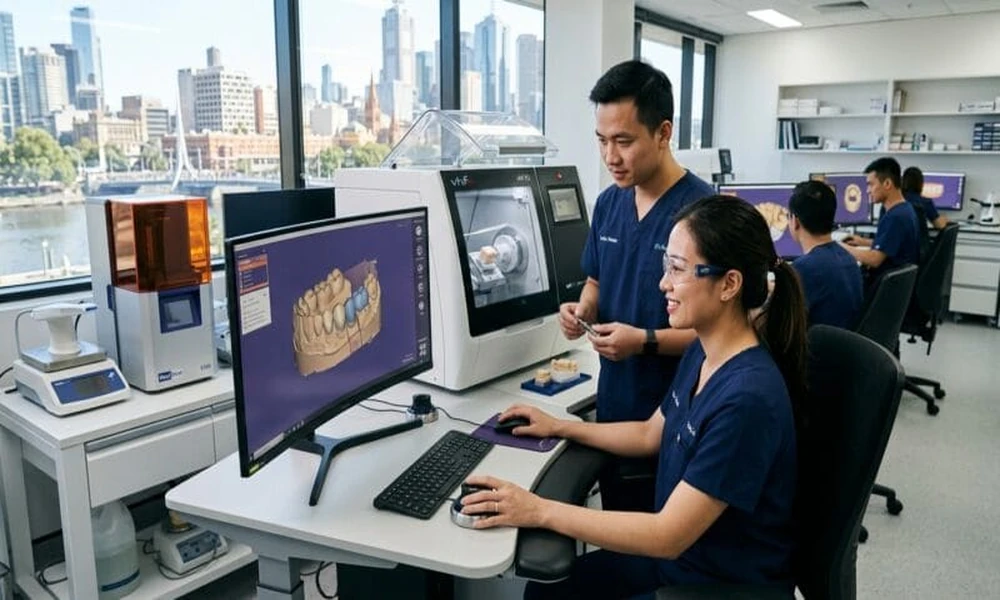
Today, many dental clinics use small handheld scanners instead of impression trays. The scanner captures a precise 3D map of your teeth in minutes, with no gagging and no mess. That digital file is then sent electronically to a design team, who use specialized software to build the crown or bridge on a computer screen, checking the margins, contacts with neighboring teeth, and how the bite comes together, all before a single gram of material is milled.
This shift matters for patients in a few concrete ways. First, accuracy improves. A digital design can be checked and adjusted dozens of times before manufacturing begins, catching problems that used to only show up once you were already in the dentist’s chair for the fitting. Second, turnaround time shrinks. What once took two to three weeks can now happen in a day or two, because the design work no longer depends on physical models traveling by courier.
Behind many of these fast turnarounds is a network of specialized design studios working alongside clinics rather than replacing them. A modern 3d dental lab team, for example, focuses purely on the digital design step, reviewing scans, refining margins, and sending back production-ready files, while your own dentist still handles the exam, the fitting, and your ongoing care. It’s a division of labor most patients never see, but it’s a big part of why same-week crowns have become realistic instead of a marketing promise.
None of this replaces the dentist’s judgment. A well-fitting crown still depends on a clinician who reads your bite correctly and communicates clearly with whoever designs the restoration. But the tools behind the scenes have quietly gotten much better, and that shows up as fewer remakes, less chair time, and restorations that simply fit right the first time.
For patients weighing treatment options, it’s a reasonable question to ask your dentist directly: is this restoration designed digitally, and who reviews it before it’s manufactured? The answer says a lot about what kind of experience you should expect.