
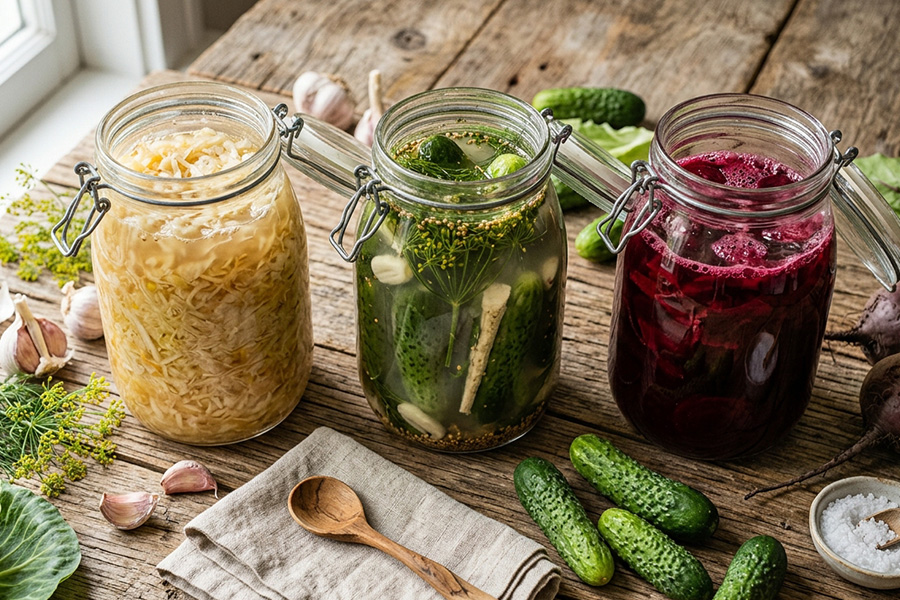
Fermentation has deep roots in Polish culinary tradition, long predating modern interest in gut health and probiotics. From cellars filled with barrels of sauerkraut to jars of tangy fermented cucumbers, this preservation method shaped the way generations of Polish families ate through long winters, and many of these recipes remain staples in Polish kitchens today.
A Tradition Born Out of Necessity
Long before refrigeration, Polish households relied on lactic acid fermentation to preserve vegetables harvested in autumn for consumption throughout the colder months. This process not only extended shelf life but also enhanced the nutritional value of vegetables, since fermentation naturally increases vitamin content and introduces beneficial bacteria. Over time, these preservation techniques evolved into distinct regional recipes, many of which are still passed down within families.
Sauerkraut: The Best-Known Polish Ferment
Fermented cabbage, known in Poland as “kapusta kiszona,” is perhaps the most internationally recognized Polish fermented food. It is made by shredding cabbage, salting it, and allowing natural lactic acid bacteria to ferment it over several weeks, resulting in a sour, crunchy product used in everything from soups like bigos to simple side dishes. Its popularity has made it a gateway food for many people outside Poland who are just beginning to explore fermented vegetables.
Fermented Cucumbers and Other Everyday Staples
Alongside sauerkraut, fermented cucumbers, known as “ogórki kiszone,” hold an equally important place on the Polish table. Unlike vinegar-based pickles common in other cuisines, these cucumbers are fermented in a simple brine of water, salt, garlic, and dill, producing a distinctly sour flavor tied to live bacterial cultures rather than acetic acid. This distinction matters nutritionally, since naturally fermented vegetables retain active probiotics that vinegar-pickled versions typically lack.
Beet Kvass: A Lesser-Known but Powerful Ferment
Among Poland’s fermented traditions, one preparation stands out for its association with therapeutic and health-focused diets rather than everyday cooking: a naturally fermented beet drink known in Polish as zakwas z buraków often referred to in English as beet kvass. Made from raw beets, water, and salt left to ferment for several days, this drink has become closely associated with therapeutic fasting protocols, including the well-known method developed by Dr Ewa Dabrowska, thanks to its probiotic content and mineral-rich profile. A study on lactic acid fermentation of vegetables highlights how this type of fermentation increases bioavailability of certain nutrients while introducing beneficial bacterial strains linked to improved gut health.
Why These Traditions Matter Today
As global interest in gut microbiome health grows, traditional Polish fermented foods are gaining renewed attention from nutritionists and home cooks alike. Unlike many modern probiotic supplements, these foods deliver live bacterial cultures through whole, minimally processed ingredients, which aligns with a broader shift toward food-based approaches to digestive and immune health. This renewed interest has also brought historic recipes like beet kvass out of regional obscurity and into wider international awareness.
Frequently Asked Questions
What is the difference between fermented and pickled vegetables?
Fermented vegetables rely on natural lactic acid bacteria to preserve and sour the food, retaining live probiotic cultures, while pickled vegetables typically use vinegar, which does not support the same bacterial activity.
Are Polish fermented foods safe to make at home?
Yes, as long as basic hygiene and proper salt concentrations are followed, home fermentation is generally safe, though vegetables should always be fully submerged in brine to prevent unwanted mold growth.
Can beet kvass be consumed daily?
Many people incorporate small daily servings of beet kvass into their diet, though those with kidney issues or on blood pressure medication should consult a doctor first due to its natural nitrate and sodium content.