
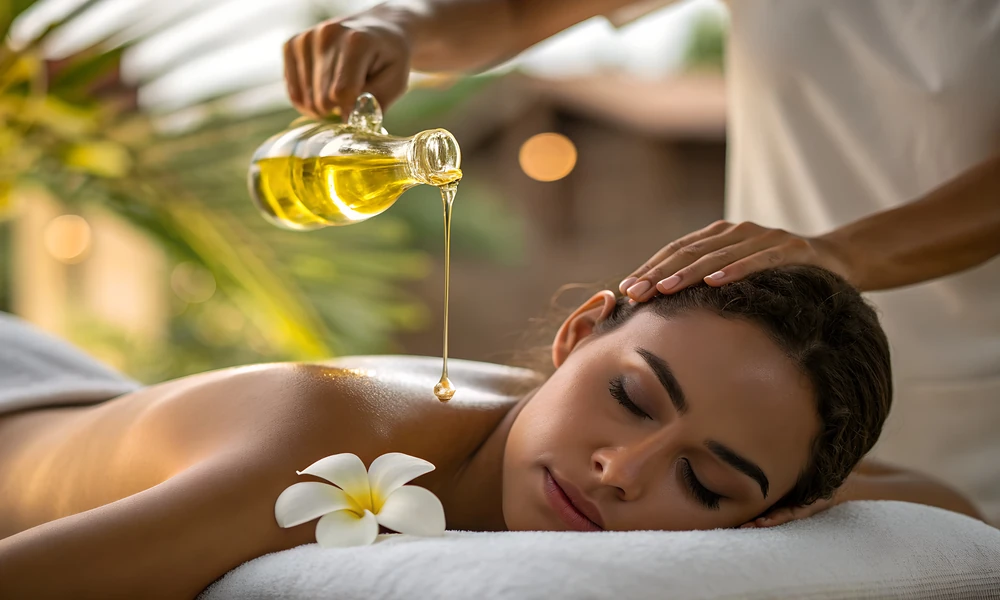
Somewhere past fifty, many people notice that their shins feel tight after a winter shower and their forearms look a little papery under bright bathroom light. Lotion helps for an hour, then the dryness creeps back. That is often the moment someone starts reading about an Ayurvedic body oil for aging skin, a product rooted in the old Indian habit of rubbing warm oil into the body before bathing.
The choice can feel confusing because store shelves mix plain sesame oil, fragrant herbal blends and bottles labeled for specific body types. A good pick depends on your skin, your climate, and your schedule. Some background on the tradition, plus a bit of careful label reading, makes it far easier to find, and Ayurvedic body oil you will actually enjoy using it.
What Changes in Aging Skin Make Body Oil Appealing?
As the years pass, skin tends to make less of its own oil, and the outer layer holds water less easily. Dryness becomes more common in later decades, especially on the legs and arms. An herbal body of oil does not rebuild skin or erase wrinkles, and no honest label should promise that. What it can do is sit on the surface, soften rough patches and slow down water loss, which is why oiled skin often feels more comfortable throughout the day.
Timing makes a real difference. Dermatologists usually advise short showers in warm water and a moisturizer applied while skin is still damp. An Ayurvedic body oil for aging skin fits neatly into that advice, since a thin layer smoothed over damp skin spreads further and feels less greasy than oil rubbed onto dry skin.
How Does Ayurveda Match Oils to Vata, Pitta and Kapha?
Ayurveda, the traditional system of medicine from India, describes three doshas, or functional energies, called Vata, Pitta and Kapha. Each person is said to carry all three in a personal balance. Vata is linked with dry, light and cool qualities, Pitta with heat and intensity, and Kapha with heaviness and steadiness. These ideas come from tradition and have not been confirmed by modern clinical research, yet many people use them as a practical way to think about texture and temperature when picking an Ayurvedic body oil.
Tradition also holds that Vata grows stronger in later life, which is one reason warming sesame oil is so often suggested for older, drier skin. Someone who runs warm, flushes easily or sweats through humid Southern summers might instead be pointed toward a Pitta body oil, usually built on cooler bases such as coconut or sunflower. A Kapha type with naturally oilier skin may be told to use less oil overall and stick to lighter blends.
Which Ingredients Belong in an Ayurvedic Body Oil for Aging Skin?
Most labels start with one or two carrier oils and then add herbs that have been steeped or slowly cooked into them. Reading the first few ingredients of any herbal body oil tells you a lot about how it will feel:
- Sesame oil: A warming, fairly rich base that has been the default for daily self-massage in Indian households for generations.
- Coconut oil: A cooling base favored in hot weather, though it can feel heavy and may turn solid in the cold.
- Sunflower oil: A light, mild option often chosen for sensitive or easily flushed skin.
- Almond oil: A soft, slow-absorbing choice for very dry areas, best avoided by anyone with a tree nut allergy.
- Herbal infusions: Plants like neem, turmeric or ashwagandha, which tradition values even though human research on them for skin remains limited.
Shorter ingredient lists are easier to judge. When heavy perfume or a long string of essential oils sits near the top, mature skin that already feels thin may react to it, so an unscented or lightly scented Ayurvedic body oil is often the safer first try.
What Should a Pitta Massage Oil Feel Like on Warm Skin?
Heat-prone skin can find thick, warming oils uncomfortable in hot weather. A Pitta massage oil usually feels cooler and lighter, often with a gentle scent from rose, sandalwood or vetiver. Rub a few drops between your fingers. It should glide without dragging, then leave a soft sheen that fades within ten or fifteen minutes.
Texture also matters in daily life. If you dress right after your shower, a fast-absorbing Pitta body oil keeps clothing from feeling damp. People who prefer an evening routine can use a richer blend and let it sit while reading or winding down. Neither habit is wrong, and plenty of households keep a lighter Pitta massage oil for summer and a heavier sesame blend for the cold months.
How Do You Patch Test and Use New Oil Safely?
Natural ingredients can still irritate skin, and older skin tends to be more reactive. The American Academy of Dermatology suggests applying a new product to a coin-sized spot on the inner forearm or inner elbow twice a day for 7 to 10 days. If redness, itching or swelling shows up, wash it off and stop. This step matters for any Ayurvedic body oil for aging skin, and it matters even more if you live with eczema, rosacea or known plant allergies.
For daily use, warm the bottle in a mug of hot water, then massage the oil in long strokes along the arms and legs and in circles over the joints, following the traditional practice called abhyanga. Many people include the scalp too, using separate Ayurvedic hair oil there because hair blends are often thinner and made to wash out easily. Leave the oil on for a few minutes, then shower with a mild cleanser. Oiled feet make tub floors slippery, so step carefully.
Keep expectations realistic. In the United States, the FDA treats products meant to cleanse or beautify as cosmetics and claims about changing how the body works would turn them into drugs. A well-made herbal body oil can make skin feel softer and look less ashy, and it should never be sold as a wrinkle cure.
Can a Body Oil Routine Change as Skin Ages?
Yes, and it usually should, because skin at sixty rarely behaves the way it did at forty. Many people move to a richer Ayurvedic body oil for aging skin once the air turns dry and the heat comes on. A drier scalp may call for a weekly massage with an Ayurvedic hair oil as well. Checking in with your skin each season, and with a dermatologist about any rash or itch that lingers, keeps the habit comfortable for years.