The Solo Training Trap and Why We Lose Motivation
As a sports journalist, I have spent the last decade interviewing elite athletes, attending major fitness expos, and testing every new workout trend that hits the market. I have access to the best training plans and nutritional advice available. Yet, despite all this professional immersion, I recently found myself stuck in a massive personal rut. For months, I would pack my gym bag, set my alarm for 5:30 AM, and then repeatedly hit snooze until it was too late to train. I was suffering from the solo training trap. When you work out alone, the only person you are accountable to is yourself. And let us be honest: we are all incredibly good at convincing ourselves that we deserve a rest day.
The problem with solo training is that it relies entirely on intrinsic motivation. On days when you feel energized and inspired, working out alone is fantastic. You can set your own pace, listen to your own music, and get in the zone. However, intrinsic motivation is a finite resource. It fluctuates based on your stress levels, your sleep quality, and even the weather. When that internal drive inevitably dips, there is no external force to pull you out of bed. You skip one workout, which makes it easier to skip the next, and suddenly you have not seen the inside of a gym in three weeks.
This isolation also breeds complacency. When you train by yourself, it is very easy to stay in your comfort zone. You lift the same weights, run the same route, and perform the same routine because there is no one there to challenge you. Progress requires pushing past your perceived limits, and doing that alone requires a level of mental fortitude that most of us simply do not possess on a daily basis. The solo training trap creates a cycle of plateauing results and declining interest.
I realized that my problem was not a lack of knowledge or a lack of equipment; it was a lack of community. I needed someone waiting for me at the squat rack. I needed someone to complain with during a grueling run. I needed external accountability. The challenge, however, was finding someone whose schedule, fitness level, and goals aligned with mine. Approaching strangers at the gym felt awkward, and my existing friends were either not interested in fitness or lived on the other side of the city. I needed a better way to connect.
Discovering the Power of Digital Community Building
My breakthrough came when I started researching how technology is changing amateur sports. I was looking for a solution that bridged the gap between digital convenience and physical effort. That is when I stumbled upon a platform that completely changed my approach to training. Instead of relying on expensive personal trainers or intimidating fitness clubs, I realized I could use location-based technology to build my own support system. The general gist is that the right app can turn your neighborhood into a massive, interconnected fitness community.
I started using a dedicated platform to find nearby groups focused on early morning strength training and weekend trail running. The experience was an absolute revelation. Within twenty-four hours, I had connected with three people who lived within a two-mile radius and were looking for exactly the same thing I was: someone to make sure they actually showed up. We did not need to be best friends; we just needed to be mutually invested in each other’s success. The app removed all the awkwardness of trying to find a workout partner organically.
The beauty of these platforms is their hyper-local focus. You are not trying to coordinate a meetup with someone halfway across the city, which usually results in endless cancellations due to traffic or scheduling conflicts. You are connecting with people who run at the same local park or lift at the same neighborhood gym. This proximity makes the logistics effortless. When your workout partner lives three streets away, the excuses for not showing up vanish.
Furthermore, these digital tools allow you to filter potential partners by intensity and experience level. As a journalist who trains fairly seriously, I needed someone who would actually push me, not someone who wanted to spend forty-five minutes chatting on the stationary bikes. By clearly stating my goals and current fitness level, I was matched with individuals who shared my commitment. This digital matchmaking ensures that when you finally meet in person, you are both ready to put in the work.
The Psychology of External Accountability
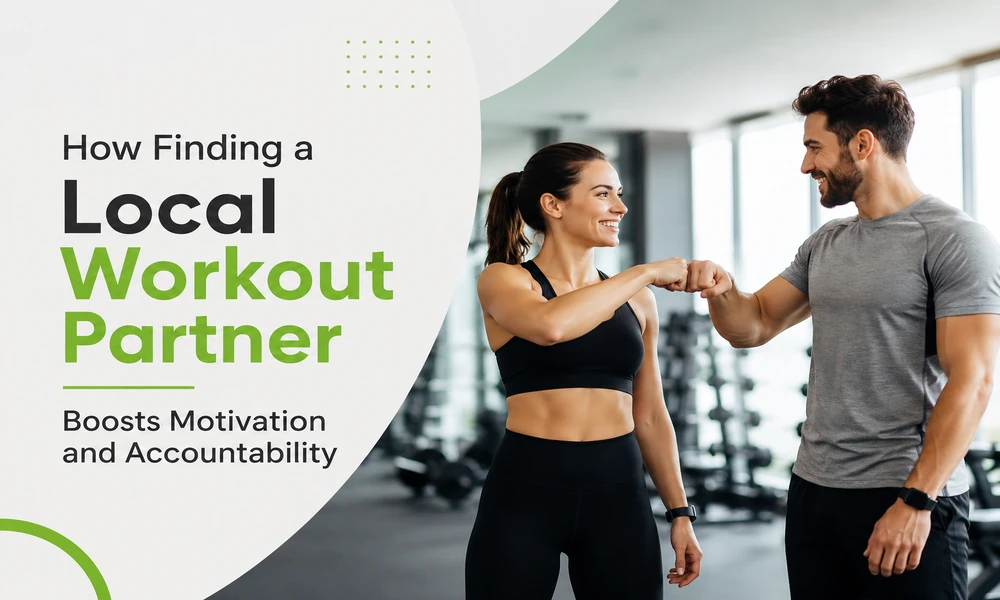
Once I started training with my new local partners, the change in my consistency was immediate and astounding. I went from skipping three workouts a week to hitting every single session for a month straight. This is not magic; it is basic human psychology. External accountability is a powerful behavioral driver. When you know someone is standing in the cold at 6:00 AM waiting for you, the social pressure overrides your desire to stay in a warm bed. You show up because you do not want to let them down.
This concept is rooted in the psychological principle of social facilitation. Studies consistently show that people perform better on physical tasks when they are in the presence of others. When I run alone, my pace naturally slows when I get tired. When I run with my local group, I unconsciously match their pace, pushing myself harder than I would on my own. The shared suffering creates a bond, and the competitive undertone forces you to elevate your game. You stop negotiating with your fatigue and start focusing on keeping up.
Moreover, a workout partner provides immediate, objective feedback. When you are lifting heavy weights, it is difficult to accurately assess your own form. A partner can spot you, correct your posture, and encourage you to add that extra five pounds you were afraid to try. This external perspective prevents injuries and ensures that you are actually progressing. They see the potential that you might be too tired or intimidated to recognize in yourself.
Accountability also extends beyond the actual workout. My training partners and I started checking in on each other’s nutrition and recovery. A simple text asking, “Did you meal prep for the week?” or “Make sure you stretch today” creates a continuous loop of healthy behavior. You are no longer navigating your fitness journey in isolation; you are part of a micro-community that actively supports your goals. This constant reinforcement makes healthy choices feel like the default setting rather than a daily struggle.
How Shared Effort Builds Lasting Friendships
What started as a purely transactional arrangement-I need you to make sure I wake up, and you need me to do the same-quickly evolved into something much deeper. Sweating together, struggling through difficult workouts, and celebrating small victories creates a unique and fast-tracked bond. You see people at their most vulnerable and exhausted, which strips away the superficial layers of normal social interaction. The people I met solely to improve my deadlift have become genuine friends.
This social aspect is the secret weapon of sustainable fitness. When your workout is also your primary social outlet, you stop viewing it as a chore. You look forward to the gym not just for the endorphin rush, but for the conversation and camaraderie. This is why group fitness classes and running clubs have exploded in popularity. Humans are inherently social creatures, and combining physical exertion with social connection fulfills two fundamental biological needs simultaneously.
I have interviewed countless marathon runners and triathletes, and they all echo the same sentiment: the medals are nice, but the community is what keeps them coming back year after year. By actively seeking out a local workout partner, you are building your own tribe. You are creating a support network that extends far beyond the walls of the gym. When life gets stressful, this network provides a healthy, constructive outlet for managing that stress.
If you are currently stuck in a fitness rut, fighting a losing battle with your alarm clock every morning, I strongly urge you to stop trying to do it alone. The solo grind is a marathon rather than a sprint, and eventually, everyone runs out of gas. Use the technology available to you. Find someone in your neighborhood who shares your goals. The simple act of committing to another person will reignite your motivation, transform your routine, and remind you that the best part of fitness is often the people you share it with.