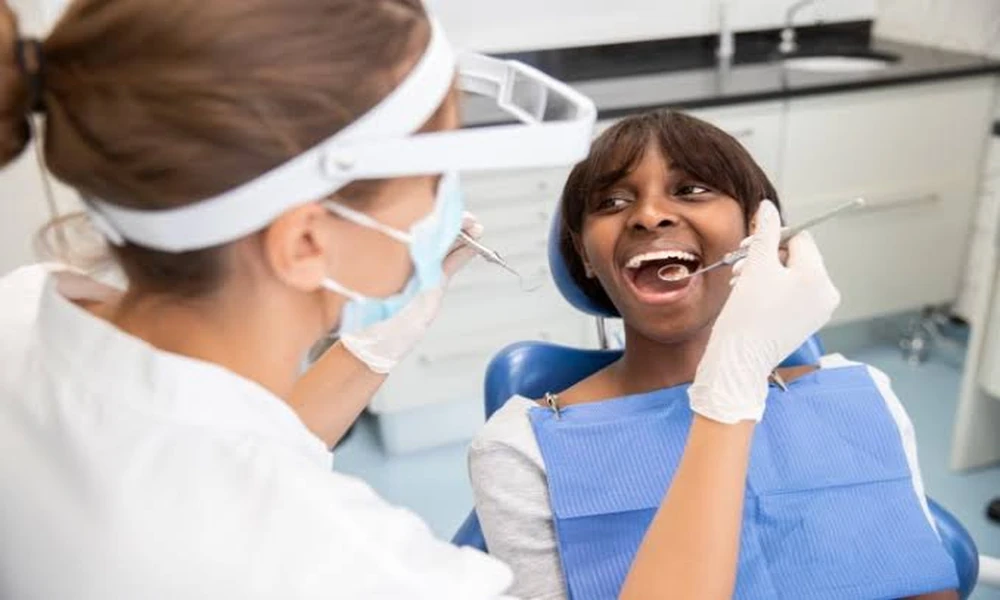
A dental appointment involves a lot of explanation: what a procedure involves, why it’s needed, what to expect during recovery, what a treatment will cost and what insurance covers. When that explanation happens in a patient’s second language, or gets relayed through a family member acting as an impromptu translator, details get lost, and patients sometimes leave with less understanding of their own treatment than they should have, and less confidence to ask the follow-up question they actually had.
Key Takeaways
- Language barriers in healthcare settings are strongly associated with lower rates of understanding treatment plans and following through on recommended care.
- A dental team that speaks Spanish directly removes the need for a patient to rely on a family member, often a child, to translate sensitive medical information.
- Adams County has a significant Spanish-speaking population, making language access a practical consideration for local dental care rather than a niche one.
- The practical next step: ask directly whether Spanish-language support is available before an appointment, rather than discovering it’s needed mid-visit.
What Does It Actually Mean for a Practice to Offer Bilingual Care?
Mountain View Family Dental’s team speaks Spanish directly with patients, which changes the nature of the conversation rather than just the vocabulary used. A patient can ask a follow-up question in the moment it occurs to them, rather than saving it for a family member to relay later. Team members offering family dentist in Brighton, CO services who communicate directly in a patient’s preferred language tend to catch misunderstandings before they turn into missed follow-up care or confusion about a treatment plan’s actual cost, which is often where language barriers cause the most practical harm.
Why Does Language Access Actually Affect Dental Care?
Informed consent depends on genuinely understanding what a procedure involves, not just nodding along to an explanation delivered through a translator or a rushed summary. A patient who doesn’t fully understand why a root canal is being recommended, or what aftercare a filling requires, is less likely to follow through correctly, and more likely to have questions they never got to ask. This isn’t unique to dentistry, but it matters just as much here as anywhere else in healthcare, particularly around cost and insurance questions that are easy to misunderstand even in a first language.
Why Shouldn’t a Child Translate for a Parent at the Dentist?
It’s common, and understandable, for a bilingual child to end up translating for a parent at a medical or dental appointment. It’s also not ideal: a child translating sensitive medical information is being asked to carry a responsibility beyond their years, and nuanced medical terminology often gets simplified or lost entirely in the process. Direct communication between a patient and their dental team removes that burden from the family member who would otherwise be stuck in the middle, and it means a parent gets a straight answer rather than a simplified paraphrase.
What Should a Family Look for When Choosing a Dental Practice?
A few practical questions help identify whether language support is genuine or an afterthought:
- Does the dental team communicate directly in Spanish, or is a translator app used as a substitute?
- Are consent forms and treatment estimates available in Spanish as well as English?
- Is Spanish-language support available at every visit, or only when a specific staff member happens to be working?
- Can billing and insurance questions be handled in Spanish too, not just the clinical conversation?
Getting a clear answer to that last question often says the most, since billing confusion is one of the most common reasons patients delay or avoid follow-up treatment altogether.
Care That Doesn’t Get Lost in Translation
Good dental care depends on a patient actually understanding their own treatment, not just receiving it. For Adams County’s Spanish-speaking families, that understanding shouldn’t depend on whichever family member happens to be available to translate that day.
Mountain View Family Dental in Brighton serves the surrounding Adams County community with a team that communicates directly in Spanish, treating language access as part of the care itself rather than an accommodation.