
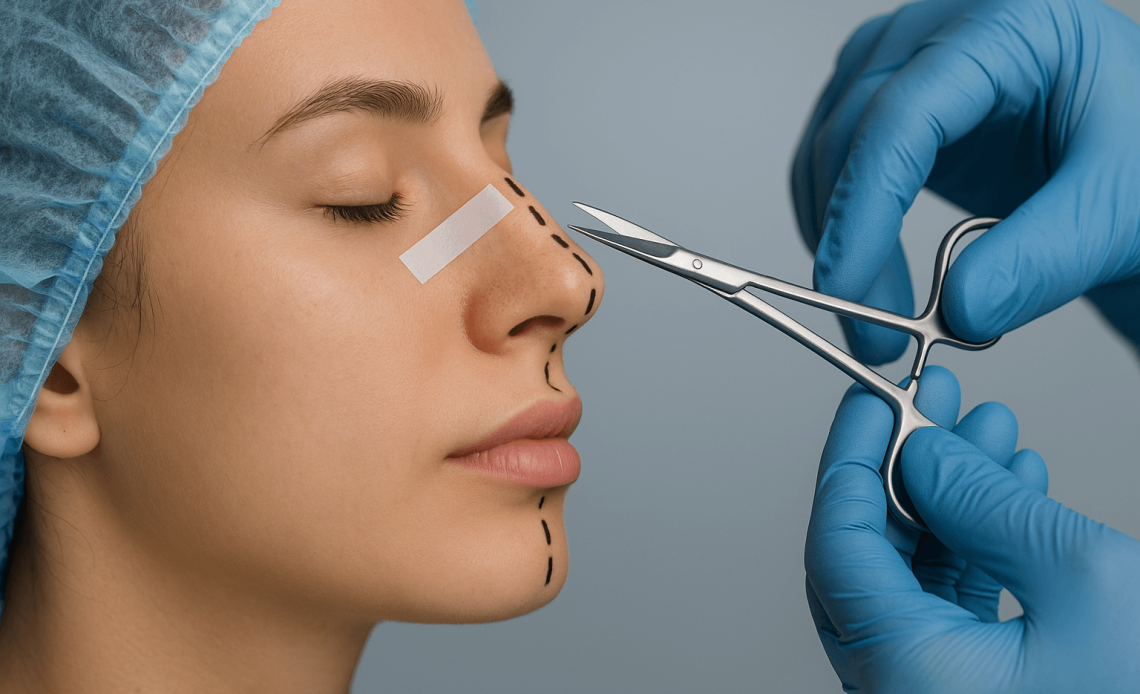
People researching rhinoplasty often encounter a simple debate: open or closed? These terms describe the surgical access, not the quality of the final result. Both approaches can be appropriate, and neither can be judged without considering the patient’s anatomy, previous surgery, functional needs and the changes planned.
The decision should follow the diagnosis. Understanding the basic differences helps patients ask better questions without trying to select a technique from a short online description.
What closed rhinoplasty means
In a closed, or endonasal, approach, incisions are made inside the nostrils. There is no external incision across the columella, the strip of tissue between the nostrils. Surgeons use these internal access points to modify selected bone and cartilage structures as say clinic rinoplastia barcelona
Potential advantages may include the absence of an external columellar scar and less disruption of some soft tissues. However, visibility and access depend on the specific maneuver and the surgeon’s method. Closed rhinoplasty is not automatically minor surgery, and complex changes may still be performed through internal incisions by surgeons experienced in those techniques.
What open rhinoplasty means
The open approach combines internal incisions with a small incision across the columella, allowing the nasal skin and soft tissue to be elevated for direct exposure of the framework. This access can be useful when detailed reconstruction, graft placement, major tip work or revision surgery is required.
The trade-offs may include a visible incision while it heals and a different swelling pattern. Scar quality varies with surgical technique, skin characteristics and individual healing. Patients should ask where the incision will be, how it is closed and what postoperative care is recommended.
Why the label does not predict the result
Natural appearance depends on diagnosis, planning, precise execution, structural support and healing. An open procedure can look natural, and a closed procedure can look operated, or vice versa. Marketing claims that one approach always produces better results oversimplify nasal surgery.
Questions to ask during consultation
Start with the surgeon’s experience in the recommended approach and in noses similar to yours. Ask to review standardized photographs of relevant cases, including front and three-quarter views rather than profiles alone. If you have breathing symptoms, confirm how the septum, turbinates and nasal valves will be evaluated.
Discuss incision placement, graft sources, anesthesia, the operating facility, follow-up and the plan for complications. Ask what changes are realistic and which features should be preserved. Digital imaging can support communication, but it cannot guarantee an exact outcome.
Recovery and risks
Both approaches require time for swelling to settle. Early bruising and congestion may improve relatively quickly, while subtle refinement, especially around the tip, can continue for many months. Individual anatomy and the extent of surgery often influence recovery more than the label alone.
Rhinoplasty risks include bleeding, infection, scarring, altered sensation, breathing difficulty, asymmetry, septal perforation and possible revision. The surgeon should explain how those risks relate to your case and provide clear instructions for medication, activity, wound care and warning signs.
Choose the plan, not the slogan
Patients do not need to become experts in surgical access before consultation. They do need a clear explanation of why a particular method has been recommended. If the reasoning is vague or based only on claims of superiority, seek another opinion.
The most appropriate technique is the one that allows a qualified surgeon to meet realistic functional and aesthetic goals while protecting nasal support. An informed choice considers the whole plan, the professional and the care pathway, not a single word such as open or closed.