
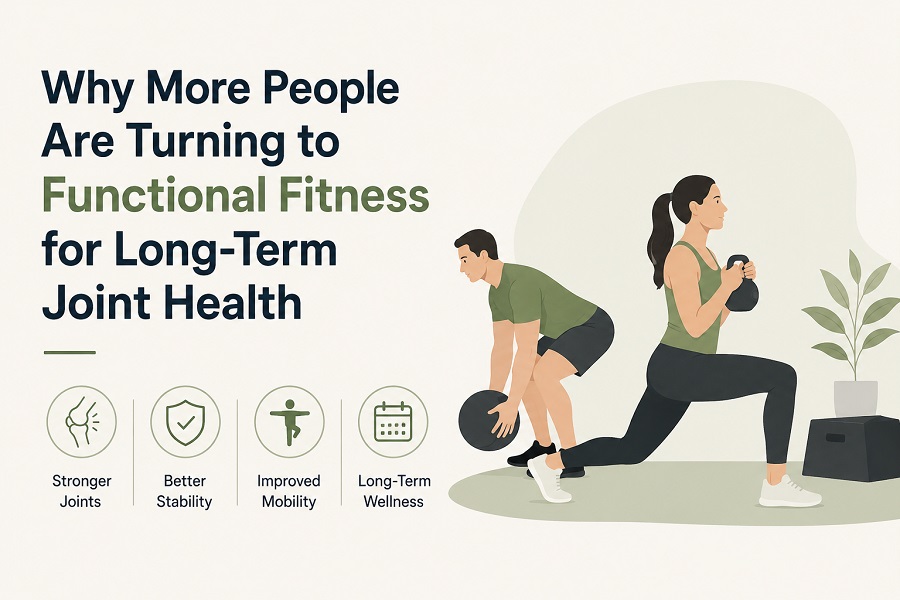
Many people today are becoming more aware of the importance of protecting their joints. Simple daily activities like walking, climbing stairs, bending, or lifting can become difficult when the joints are weak or painful. This is one reason why functional fitness is growing in popularity. Instead of focusing only on appearance or heavy gym routines, functional fitness helps the body move better in everyday life.
People of all ages are now choosing this style of exercise to stay active, prevent injuries, and support long-term joint health.
What is Functional Fitness?
Functional fitness is a type of exercise that trains the body for real-life movements. The workouts are designed to improve balance, strength, flexibility, coordination, and mobility. These movements often copy actions people do every day, such as squatting, reaching, pushing, pulling, or twisting.
Unlike some traditional workouts that focus on one muscle at a time, functional fitness trains several muscle groups together. This helps the body work as one complete system.
Common functional exercises include:
- Squats
- Lunges
- Step-ups
- Planks
- Resistance band workouts
- Bodyweight exercises
These exercises may look simple, but they can make a big difference in how the body feels and moves over time.
Why Joint Health Matters
Healthy joints allow the body to move smoothly and comfortably. However, poor posture, inactivity, aging, excess weight, and injuries can put pressure on the joints. Over time, this may lead to stiffness, swelling, or ongoing discomfort.
Many people are now paying closer attention to issues linked to joint pain causes in Passaic County and other communities across the country. Long work hours, less physical activity, and unhealthy lifestyle habits are making joint problems more common than before.
The good news is that movement can help. Gentle and controlled exercise is often one of the best ways to support the joints naturally.
How Functional Fitness Supports the Joints
Functional fitness helps strengthen the muscles around the joints. Strong muscles give the joints better support and reduce extra strain during movement. This can help lower the risk of injuries and improve stability.
Another major benefit is flexibility. Tight muscles can pull on the joints and cause discomfort. Functional training improves flexibility and range of motion, helping the body move more freely.
Balance is also important, especially as people get older. Better balance can help prevent falls that may damage the knees, hips, shoulders, or back.
Many people also notice reduced stiffness after staying consistent with functional workouts. The body often feels lighter, stronger, and more energized.
A Sustainable Way to Stay Active
One reason functional fitness continues to grow is because it feels more natural and less overwhelming. People do not always need expensive equipment or intense workouts to see benefits. Many exercises can be done at home, outdoors, or in small fitness classes.
Functional fitness is also easy to adjust for different ages and fitness levels. Whether someone is recovering from an injury, starting a wellness journey, or trying to stay active later in life, these exercises can be modified to match their needs.
Conclusion
Taking care of the joints is an important part of long-term health. Functional fitness offers a practical and safe way to build strength, improve movement, and support the body for years to come.
As more people focus on healthy aging and injury prevention, functional fitness is becoming more than just a trend. It is a smart lifestyle choice that helps people move with confidence, stay independent, and enjoy daily life with less discomfort.